

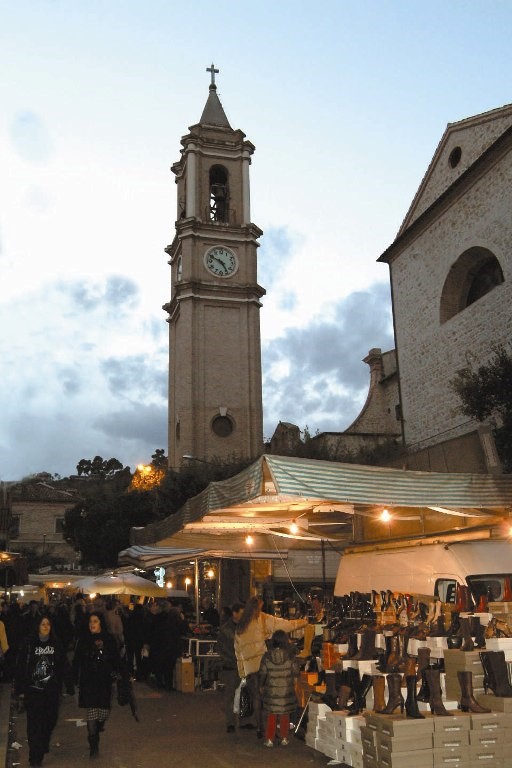
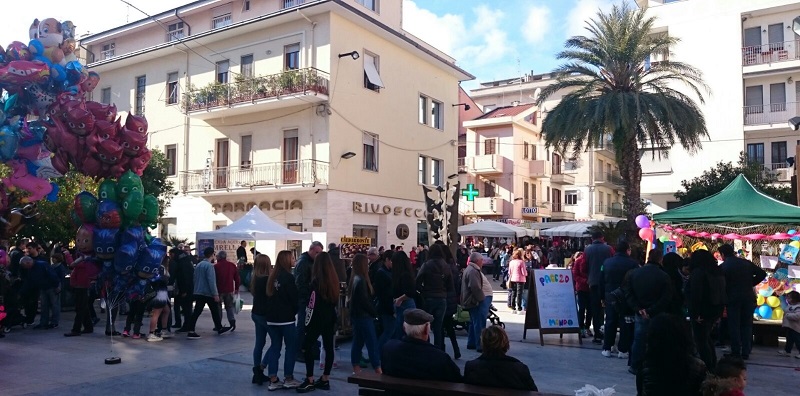
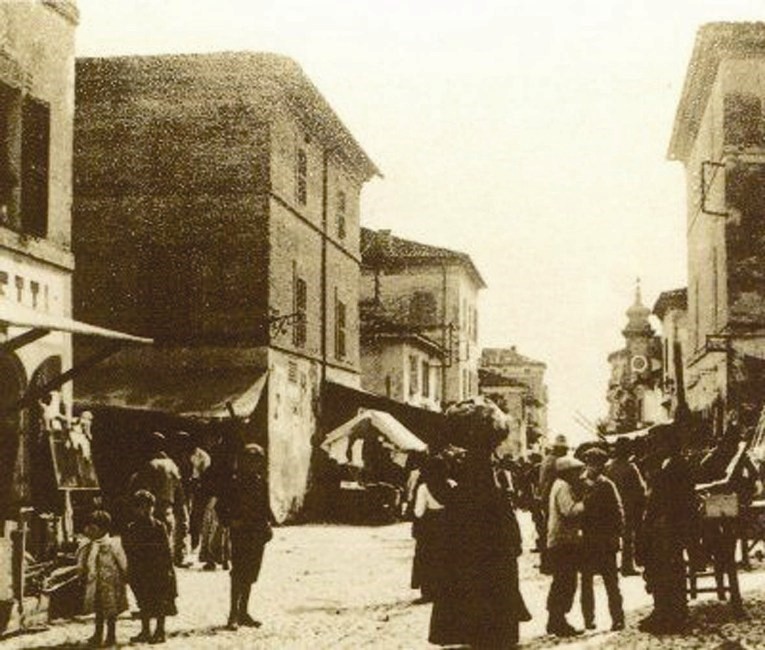
The San Martino Fair, which traditionally takes place on 11 November, attracts thousands of visitors every year and a consistently high number of traders who book a stall, either to sell goods or simply to display them. They are the undisputed architects of this enduring intertwining of the present and the past.
A BRIEF OVERVIEW OF LOGISTICS
Exhibitors are usually distributed across the exhibition centre as follows:
Food products (fruit, cheese, baked goods, etc.): central area, near the fruit and vegetable market;
Household goods and hardware: Via Matteotti (next to the SS 16) and part of Via Capriotti;
Food and drink stalls (porchetta, fried fish, Canzanese-style turkey, etc.): Viale Crucioli and Via Laureati (near the Ricciotti Pine Forest);
Miscellaneous goods: the entire fairground area from Via Verdi to Via Battisti;
Animals and Flowers: the area in front of the primary school on Viale Garibaldi;
Direct producers: the area adjacent to the fruit and vegetable market, part of Piazza Fazzini, Largo Raffaello Sanzio and various stalls scattered throughout the entire area;
Shops selling fireplaces and various other items: Viale Garibaldi and the south side of Via Marconi.
A BRIEF HISTORY
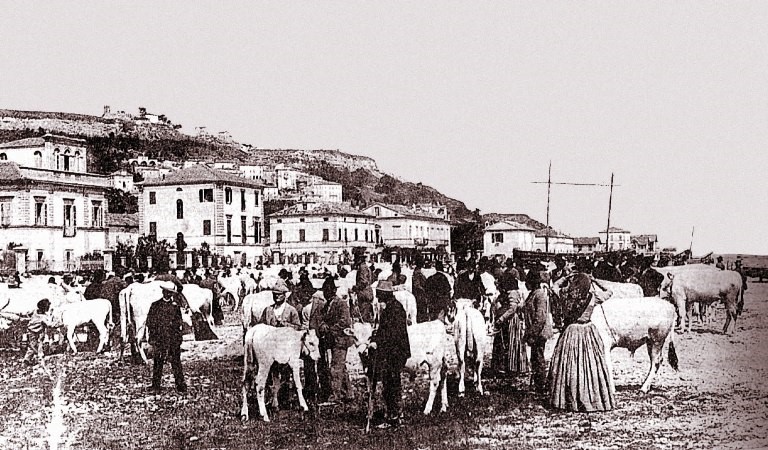
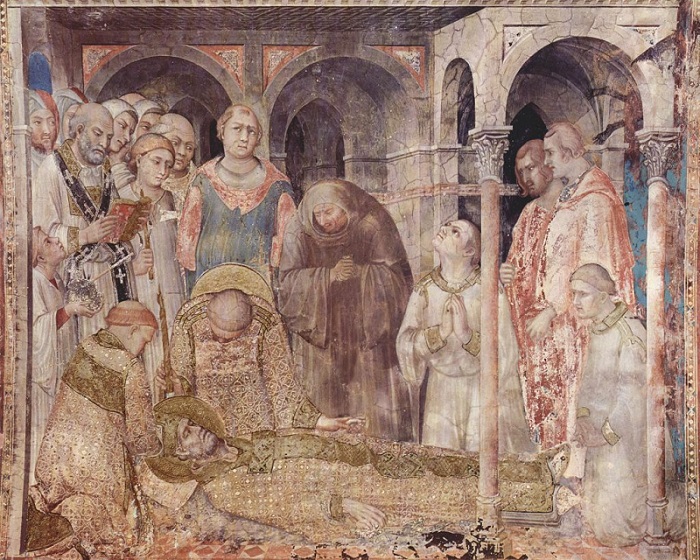
This fair, which is still held on 11 November, the feast day of Saint Martin, was originally a popular fair linked to the economy of the second half of the 18th century and based mainly on the exchange of raw materials and agricultural produce for semi-finished or finished goods
What made it unique was that it was a ‘free’ fair, open to everyone, with no specific checks on the origin of the goods.
Today, the fair has lost its purely rural character and is now primarily a festive occasion attended by a considerable number of exhibitors and thousands of visitors, many of whom come from neighbouring towns as well.
You can find all sorts of things at the market stalls, including tempting local specialities and countless types of sweets, but in San Martino the main celebration is the arrival of the new wine, which can be enjoyed alongside the ever-present roasted chestnuts.
A curious event linked to the feast of St Martin is the so-called ‘race of the cuckolds’, the origins of which are unclear: some believe it stems from the Lombards’ custom of celebrating the saint with grand military parades in which helmets adorned with striking horns were worn; others maintain that it stems from the fact that the peasants taking part in the fair would ‘cuckold’ their masters by taking the produce intended for them.
In any case, the tradition has endured and, to avoid any misunderstanding, the most eagerly awaited dish at the St Martin’s banquet is a celery salad (‘lu sonnere alla cazzimberie’) which, being seasoned with plenty of pepper, is considered an aphrodisiac and is therefore served, in particular, to men, so that their wives do not get the urge to cheat on them.