

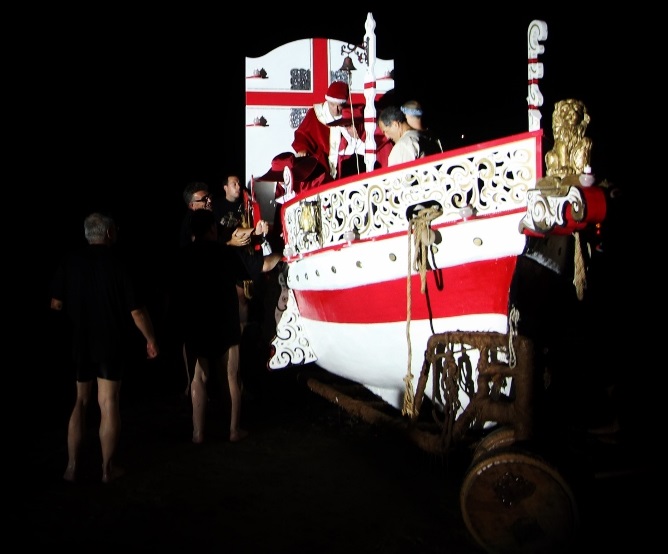
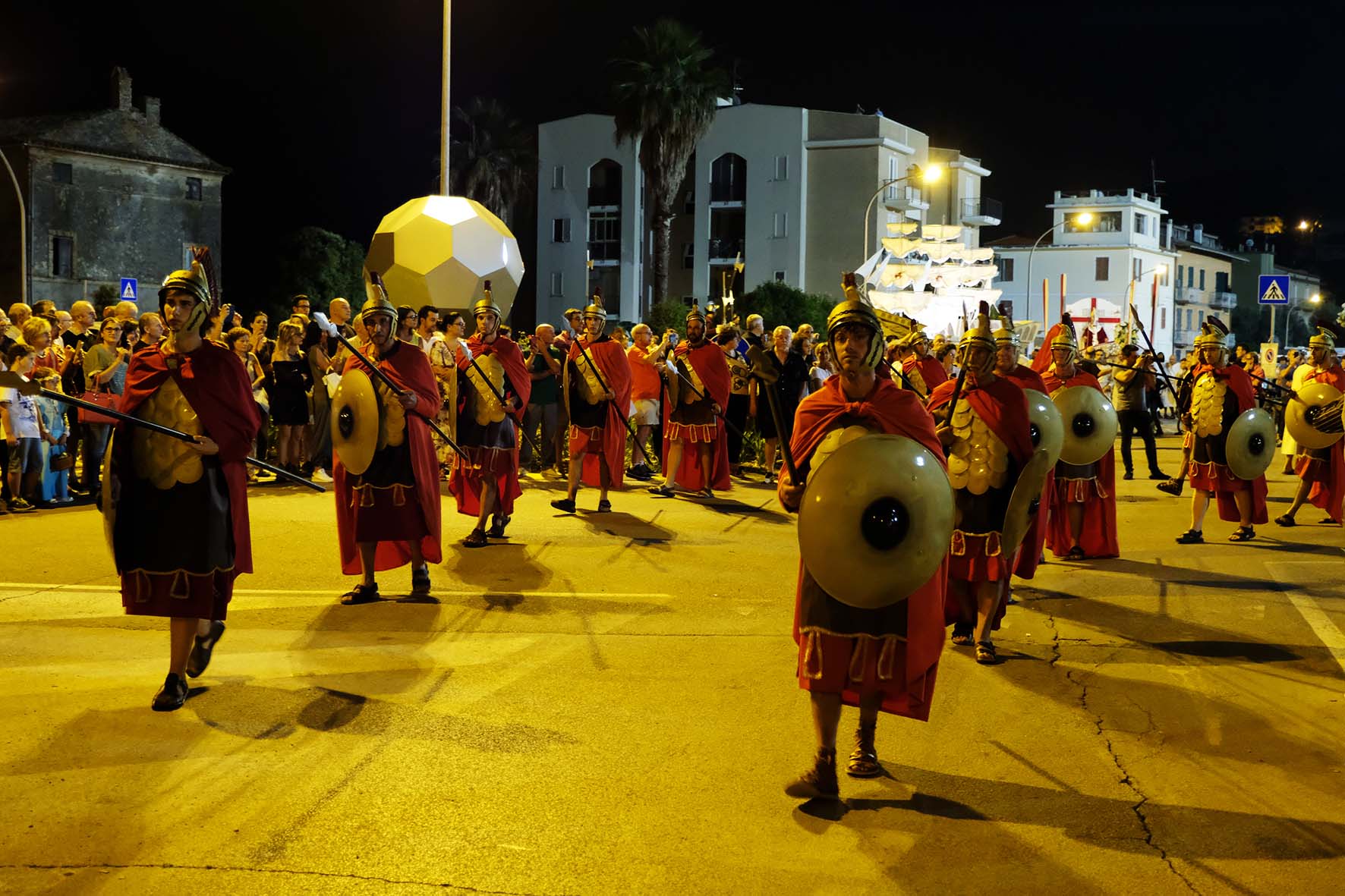
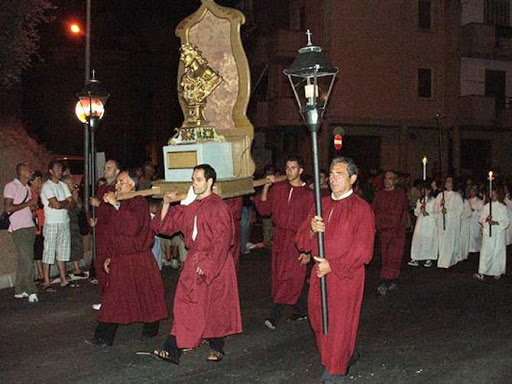
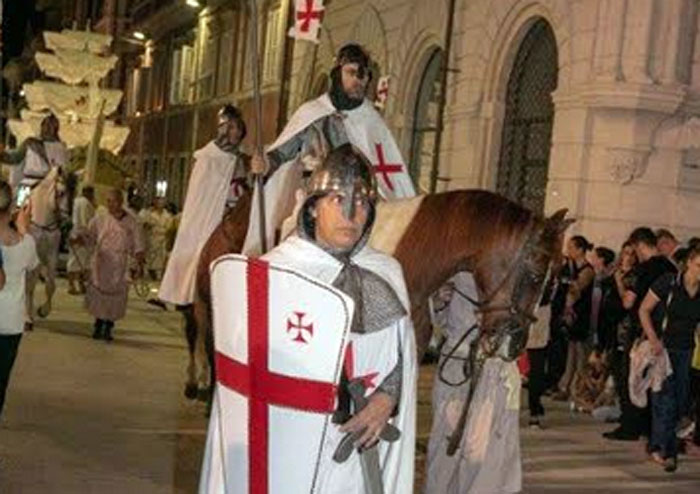
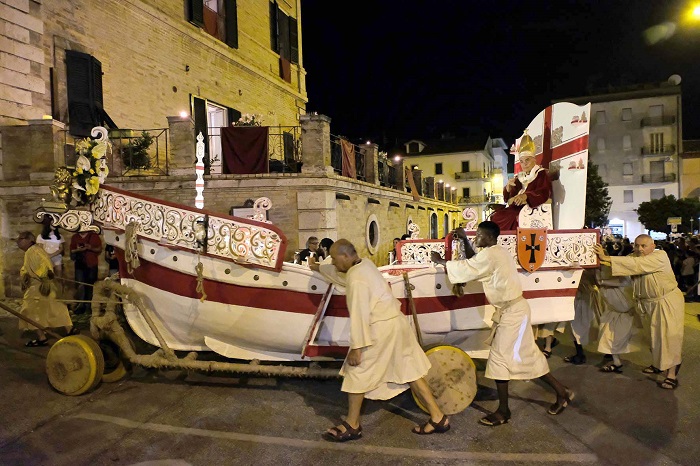
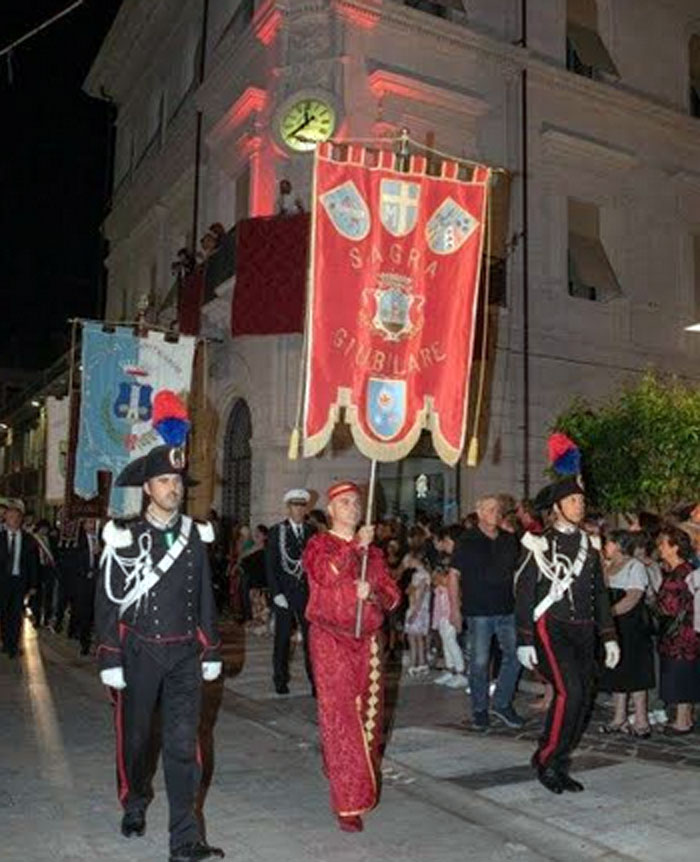
In the summer of 2018, after a six-year hiatus, the Sacra returned – our city’s main collective, popular, civic and religious event.
Its tradition stretches back centuries: it recalls Pope Alexander III’s fortuitous landing on the Grottammare coast, which occurred as a result of a terrible storm, probably in 1177.
Legend has it that, whilst Emperor Frederick Barbarossa was preparing to invade Italy for the fourth time, Pope Alexander III, leader of the League of Lombard Communes, wished to travel to Venice to urge that republic to give greater support to the national cause, in order to bolster the coalition’s strength and courage.
During the voyage across the Adriatic, a terrible storm forced the Pope’s ships to take refuge in the port of Grottammare, where the monks of St Martin invited the Pope to stay until 1 July to attend the festivities that the people of Piceno had been celebrating for centuries, in keeping with ancient local traditions.
The turnout was immense: thousands upon thousands of people came from the remotest corners of the region. The religious fervour of the pilgrims who had flocked there so astonished Alexander III that, moved and filled with admiration, he removed his camauro and filled it with sand, proclaiming: ‘As many indulgences shall be granted to each pilgrim as there are grains of sand contained herein.’
Perhaps we are dealing with a legend that has grown out of history. But ever since that fateful year, around 1177, whenever 1 July falls on a Sunday, thousands of pilgrims still flock to the church of St Martin to this day.
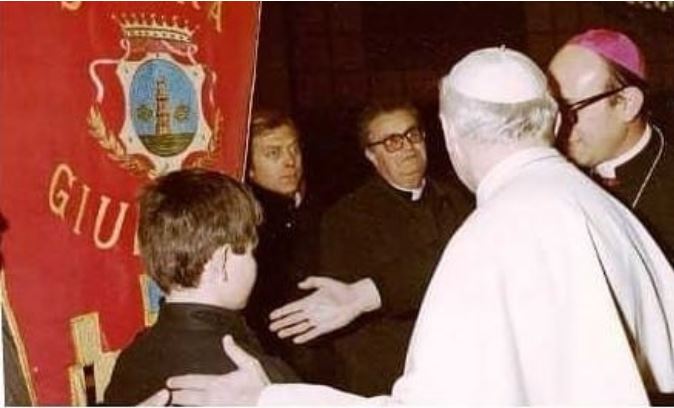
In fact, although no trace remains of the original papal bull issued by Alexander III, in 1803 Pope Pius VII and subsequently Pope Paul VI in 1973 officially confirmed the privilege, decreeing that a plenary indulgence may be gained by all those who visit the Church of St Martin during the seven days preceding and following Sunday 1 July: an event that occurs very rarely, namely at intervals of six, five, six and eleven years.
In fact, it is only since 2012 that the calendar has no longer marked the beginning of July as a Sunday; before that, we find the Sacra in 2007, 2001, 1990, 1984, and then in 1979, 1973, and further back, even further back in the years and centuries. Therefore, if the tradition were true, this year we would be celebrating the 123rd Sacra: a truly memorable event, in short, which over the next twenty years will only be repeated in 2029.